

How Mobile Payments Changed Online Casino Banking
Paying at online casinos has come a long way over the past decade. What once meant digging out your card and typing in a string of numbers or logging into online banking on a computer can now take just a few taps on a smartphone.
As digital wallets became more widespread, online casinos began offering players a faster, more convenient way to pay, letting them authorise transactions with biometric authentication or other security checks.
It was a step toward making one of the experience's most tedious parts less like filling out paperwork and more like the tap-and-go experience people were getting used to everywhere else.
While these options cut down on the amount of information players need to enter themselves, older payment methods have stuck around. Credit and debit cards and bank transfers are all still widely used, but what’s changed is how people use them, as smartphones have tailored the process of providing payment details, approving transactions, and managing money on the go.
Paying With a Mobile Wallet and Linked Cards
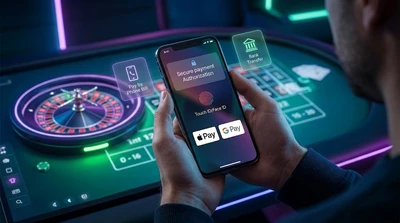
Mobile wallets mimic the idea of tapping your card at a store in the online space. Rather than having to deal with card expiry dates and security codes, users can often select Apple Pay or Google Pay and approve the payment with a double tap or biometric authentication on their device. It’s a process that happens in a matter of seconds rather than minutes.
Using a mobile wallet lets you authorise the transaction through a service that securely accesses your existing card information, acting as a go-between. It stores or accesses payment credentials linked to an existing card and helps authorise the transaction. The money still comes from that account or card, instead of from a separate pot of funds held in the wallet.
On top of the convenience, there’s also a security benefit. Apple Pay and similar services use what’s called tokenisation, which replaces the actual card number with a device-specific identifier and uses transaction-specific security data.
That means the website or app receiving the payment can’t access the original card number. With confirmation through Face ID or a device password, there’s even a layer of authentication before the transaction goes through.
To enjoy the benefits of mobile wallets, however, the casino needs to support the wallet and the user’s payment method needs to be eligible. Not all options are necessarily available across the board.
And just because a casino accepts a mobile wallet for deposits doesn’t mean it can send withdrawals through that same wallet. As deposits and payouts come with different rules, operators may require users to use another method for withdrawals, like a bank transfer.
Paying Through a Mobile Banking App
Mobile banking apps now make it possible to approve a transaction without the extra steps that were once required. Depending on the payment service, customers can sometimes select their bank at checkout, open their banking app, and authorise a transfer directly from their account.
For those who want to fund their account and get to playing faster on casino sites, banking apps improve that convenience but still provide the familiarity and ease of the bank interface. Some payment services even connect the casino’s checkout system with certain banks, guiding the customer through the steps for approval.
In contrast to paying with a card through a mobile wallet, account-to-account payment moves the money directly from the customer’s bank account to the recipient’s account. Since payment-provider integrations connect these steps, not every transaction is identical. Aspects like processing times and security checks can vary.
Paying by Phone Bill
Mobile payments also don’t have to involve a bank account or card at checkout. Thanks to carrier billing, eligible customers can charge certain purchases to their mobile phone bill or pay using prepaid credit. With the mobile network operator handling the charge, the payment won’t follow the same route as a classic card transaction.
In the context of online casinos, the phone bill route can offer an alternative way to fund an account where the service is supported. Some casinos that take deposits by phone offer carrier billing through certain mobile networks and payment providers.
How it works is that the deposit is either added to the customer’s next phone bill or deducted from an available prepaid balance—depending on the service setup and what the customer’s plan supports. Naturally, availability depends on the mobile operator, country, and casino, and transaction limits can also differ from those of bank transfers and debit cards.
The carrier billing method is generally a deposit-only option. Since the charge goes through a mobile account, there’s no way to receive casino winnings.
Why You Can’t Always Withdraw the Way You Deposit
Just because a particular payment method is available for deposit doesn’t automatically mean you can withdraw winnings through it too. If you review the deposit and withdrawal methods on a casino site, you’ll often see that the lists don’t match.
Some methods are designed to collect payments, while others can handle money moving in both directions. While we’ve covered the difference between mobile wallets, bank transfers, and carrier billing, the casino’s own internal rules also influence which methods are available for withdrawals.
Operators may need to verify a player’s identity and confirm the payment account belongs to them before releasing funds. It’s a process that helps meet security and anti-money-laundering requirements and can affect how withdrawals are processed.
Some casinos may even require withdrawals to be returned to the original payment method. However, if the original method can’t accept incoming payments, the player will need to select another eligible option.
What to Consider When Paying on Your Phone
Paying with your phone might jump to mind as the quickest option available, but you’ll still need to consider the practicalities of the payment method. What you choose can affect how much you can deposit and withdraw, how long a transaction takes, and how easily you can access your money later. Check for these details before settling on a payment method:
- Availability: Your device, location, and mobile network could affect the services and options available.
- Transaction limits: Payment providers may set minimum or maximum amounts per transaction or within a certain period.
- Deposit and withdrawal options: Check whether the payment method supports both withdrawals and deposits.
- Processing times: Some payments go through immediately, while others take longer due to extra checks or bank processing times.
- Fees: Some providers and transaction types may incur fees from banks, mobile operators, or payment services.
- Security and verification: Banking apps and mobile wallets use different authentication methods, and casino operators may require identity checks before processing payments or withdrawals.
Mobile Payments Offer More Choice, Not One Solution
Smartphones have changed how players fund their online casino accounts, making it possible to pay faster and more conveniently while adding security measures and greater flexibility. But while these options reduce manual work, they don’t all function the same way. Payment methods differ in availability, transaction limits, withdrawal capabilities, and processing times, so players need to consider which option best suits their needs.

Author
Gambling Consultant


