

What Happens to Your Online Casino Account When You Cross a Provincial Border?
When you cross the border from British Columbia into Alberta, your IP address may show you’ve changed provinces. As a result, you might be able to log in to your online casino account and check your balance but be unable to participate in real-money play.
Access to and use of a casino account depends on where you’re physically located, not just where you opened your account or where you’re a resident.
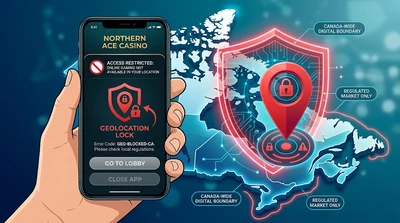
Canadian provinces all have different rules for online gambling, as they do for vehicle registration, liquor licensing, and public health coverage. Your province of residence can affect which gambling services you’re eligible to use, but your physical location can also determine whether you can place bets.
How Provincial Rules Affect Online Casino Access
Canada doesn’t have one nationwide licensing system that lets every regulated online casino accept players across the country. Instead, individual provinces decide how regulated gambling is offered within their jurisdictions. While Ontario and Alberta both currently have private-operator markets, other provinces use government-operated platforms, like Espacejeux in Quebec.
Altogether, these differences create Canada’s patchwork of online casino rules, making platform availability more complex than it would be under a single nationwide system. Consequently, simply travelling across Canada can affect your gambling options.
Online casinos don’t take location checks lightly, either—they use geolocation technology to check whether players are physically inside the province in order to permit wagering. Depending on the platform, these checks may use network information, device location services, or other similar verification methods. Despite you providing an address when opening your account or other registration details, location checks help determine where you’re accessing the platform from at that moment.
Ontario Shows the Difference Between Account Access and Betting
Given its established regulated online gambling market, Ontario offers a clear example of how online casino access can change when you travel. According to iGaming Ontario, players can open or access an account with a regulated operator when not physically in Ontario, as well as deposit or withdraw funds, but can’t place wagers while physically outside the province. On Ontario sites and apps, player residency status isn’t a factor in whether players can play on websites offered by registered Ontarian operators.
When you leave the province, you’ll still be able to check your balance, request a withdrawal, and review your account details, even though you can’t participate in a table game or spin the slots. One important caveat to note is that these permissions don’t guarantee that every casino will offer the same account features while you’re traveling. Operators might go beyond provincial regulations and put forth their own terms and verification procedures, which players should review.
BC Players Face Residency and Location Restrictions
Ontario’s regulated private operators typically base eligibility on a player’s physical location rather than their province of residence. However, individual platforms can have additional requirements. For example, OLG.ca requires players to be Ontario residents as well as physically located in the province.
Meanwhile, a few thousand kilometres away in British Columbia, the province still uses a government-operated online gambling model with PlayNow.com as its only official online gambling platform. The PlayNow platform makes two requirements explicit in its player agreement: players must be BC residents to register and must also be physically in the province to place wagers. Therefore, a BC resident visiting Saskatchewan can’t keep gambling on PlayNow because they’re not physically in BC. The same restriction stands for sports betting, casino games, and other games offered through the platform.
Just like other registered independent platforms in Ontario might do, the platform will check for a location when someone logs in and also periodically during a session. Using information like IP addresses and location coordinates, the platform will confirm that players are accessing PlayNow from within BC. If it can’t verify a location, access may be blocked until location services are enabled or players update their device settings. PlayNow’s guidance is much stricter about access compared to Ontario, barring players from accessing their accounts and restricting their ability to place wagers.
Atlantic Canada Shows That Boundaries Can Be Regional
Many assume that online gambling platforms are limited to a single province, but Atlantic Lottery serves four provinces—Nova Scotia, New Brunswick, Prince Edward Island, and Newfoundland and Labrador—through a shared regional system. Residents from any of the four participating provinces can use Atlantic Lottery’s online services as long as they’re physically located within Atlantic Canada when playing.
Traveling, Moving, and Using the Same Casino Brand
A weekend away and a permanent move will naturally lead to different questions about your account. When traveling, the main issue will likely be whether you can place bets from a temporary location. Meanwhile, moving may affect your eligibility to keep an account, especially if the operator requires players to live in a specific province.
Our examples illustrate these different scenarios. Players don’t generally need to be Ontario residents to use private operators but need to be physically in Ontario. Other platforms, like BC’s PlayNow, have their own residency requirements.
And even if the same casino brand appears in two provinces, it doesn’t automatically mean your existing account will simply work in both. Operators usually have separate terms and account arrangements—and sometimes even separate websites—for different regulated markets, meaning your access and login won’t necessarily carry over automatically.
A Checklist to Use Before Traveling
Wagering can usually wait. But if you’re on a hot streak or want to see what you can access while on the go, a little preparation can help. Before heading to another province, make sure you can answer these questions:
- Can you access your account? Does the platform let you log in at all?
- Can you deposit or withdraw funds? Just because you can or can’t participate in real-money play doesn’t mean you can or can’t access your funds.
- Can you still place bets? Check whether the platform accepts real-money wagers from the province you’re visiting.
- What happens if you move permanently? Find out whether you can hold an account even after the move.
- Does the operator offer a separate service at your destination? Check whether accounts and balances carry over or require a separate login.
The rule of thumb is to never assume the rules are the same across every platform, even within one province. Use the terms and conditions page and customer support channels to clarify any information you find unclear. If location restrictions prevent you from playing, respect them rather than trying to bypass the location checks with tools like VPNs, which are often blocked and could violate the operator’s terms.
A Changing Landscape for Canadian Players
Canada’s online gambling market is dynamic and developing. Alberta recently followed in Ontario’s footsteps, establishing its own regulated private-operator market in July 2026. As more provinces change their arrangements, information about platform availability can quickly become outdated.
Even with an existing, verified account, crossing a provincial border can quickly change which gambling services you can use. Rules vary by platform and province, and you may still be able to access your account or withdraw funds even if you can no longer place wagers.

Author
Gambling Consultant


